
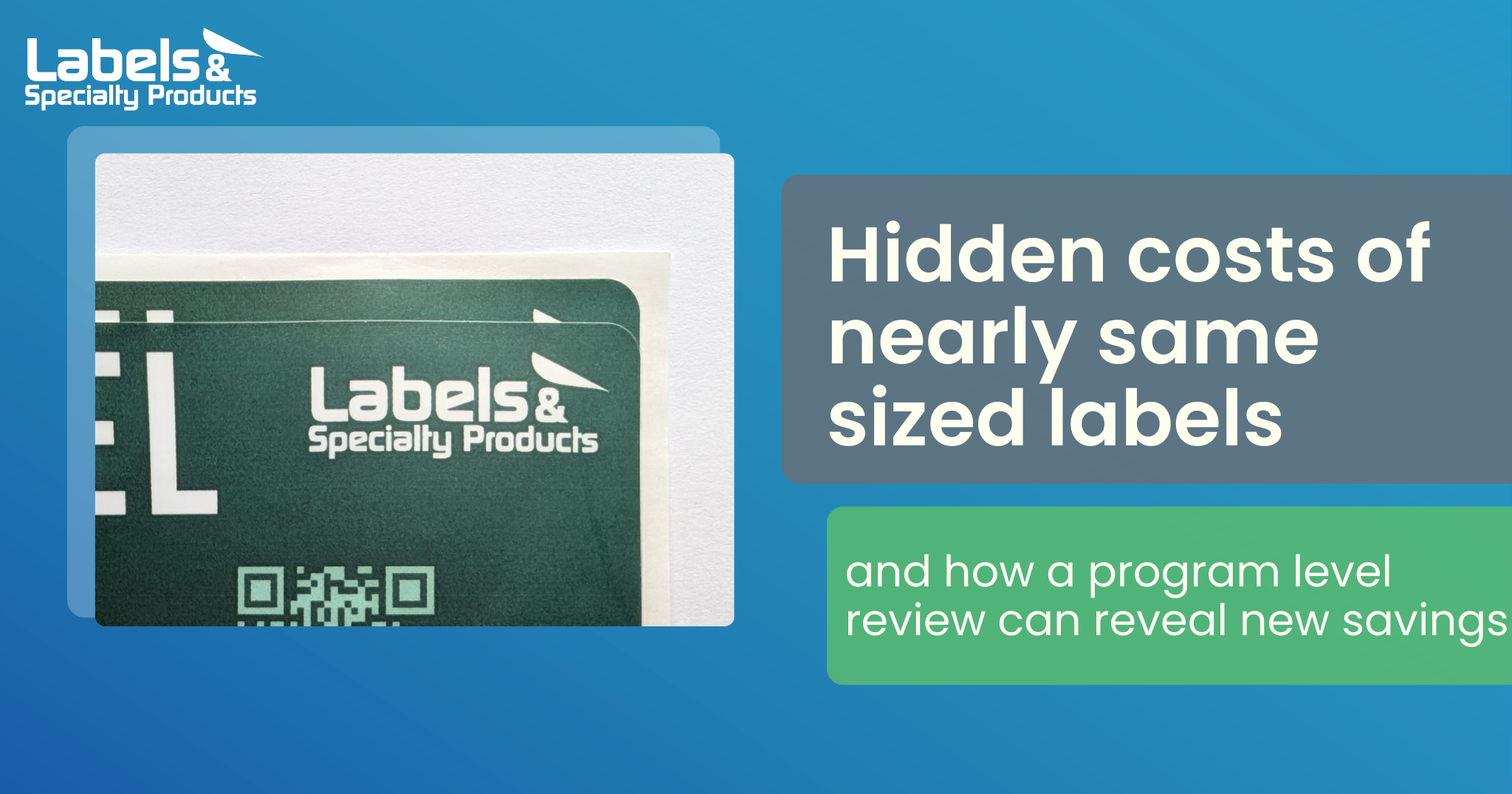
On paper, two labels can look nearly identical. One may be just slightly wider. Another may be slightly taller. Visually, the difference is negligible. Operationally, it can be expensive.
When label sizes are almost the same but not exact, brands often absorb hidden costs that quietly add up across their label programs.
Why Small Size Differences Create Real Costs
In label manufacturing, dies are fixed. Even minor size differences typically require a separate die, a separate setup, and a separate press run. When labels cannot share a die, each SKU becomes isolated. That isolation increases tooling requirements and reduces efficiency. What feels like a small design decision often becomes an ongoing operational cost.
The Compounding Effect Across a Label Catalog
One additional die may not feel significant. Across a growing label catalog, the impact multiplies. Nearly identical label sizes lead to unnecessary tooling purchases, more press changeovers, smaller individual runs, and longer total production time. Over time, this drives higher per unit costs even when pricing has not changed.
Why This Is Easy to Miss
Most brands review labels one SKU at a time. A new SKU triggers a new quote. A new artwork file triggers a new size. A new size triggers a new die. Each decision makes sense on its own. The larger pattern often goes unnoticed. Without stepping back to review the full label catalog, teams rarely realize how many SKUs could share dies with little to no impact to shelf appearance.
How Our Team Finds These Savings
This is where a catalog level review makes a difference. Our team looks across an entire label program to identify labels that are within tolerance of an existing die, opportunities to standardize sizes across product families, and minor adjustments that allow shared tooling. In many cases, the solution does not require a redesign. It requires alignment. By consolidating die usage, tooling costs decrease, setups are reduced, and volumes can be combined for greater efficiency.
These savings continue with every reorder.
Why This Matters More as Brands Grow
As SKU counts increase, small inefficiencies scale quickly. What starts as a handful of extra dies can become a meaningful cost driver as catalogs expand. Brands that take time to standardize early build label programs that are easier to manage, more cost efficient, and more flexible as demand changes.
The Takeaway
Labels that are nearly the same size often cost more than brands realize. Without a catalog level review, those costs remain hidden in tooling, setups, and fragmented volumes. A thoughtful review, such as our OPTIM program can uncover savings without changing suppliers, materials, or production schedules. It simply connects the dots across a label program.





Leave a Comment